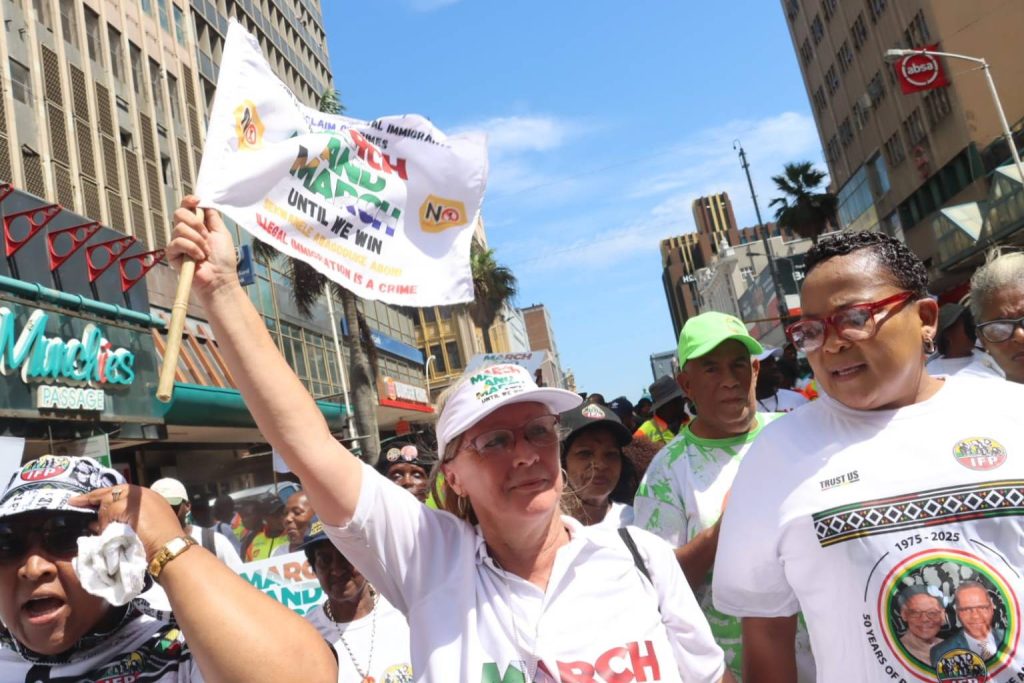

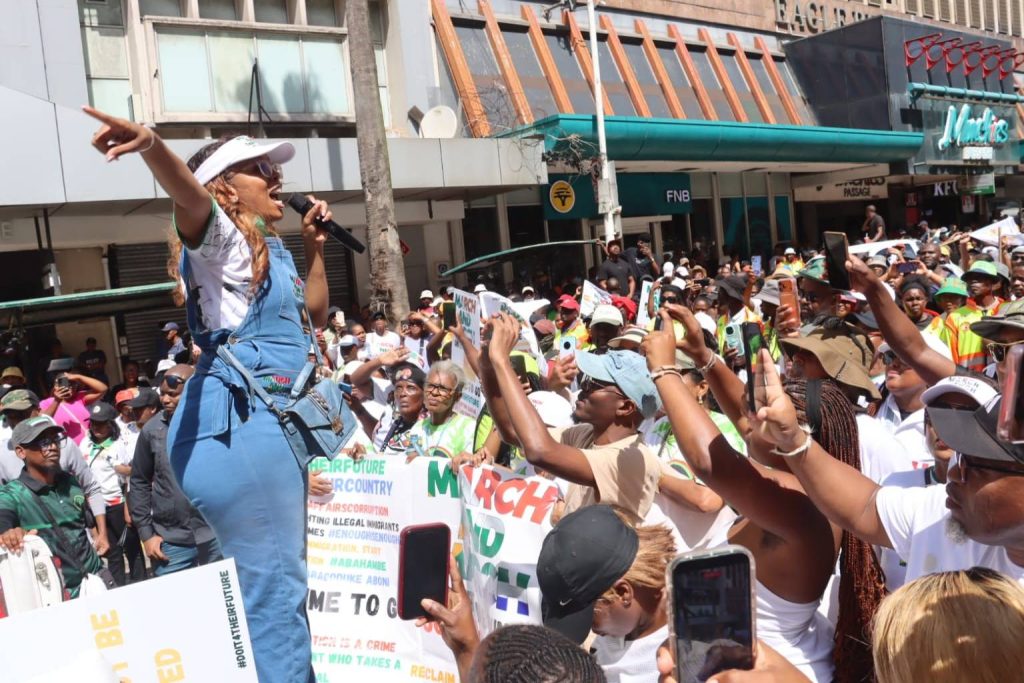
Durban’s much-hyped anti-immigration march on Wednesday drew thousands to the streets, but despite the political weight behind it, the protest ultimately landed with more noise than impact.
Organised by the March and March movement, the demonstration brought together an unusual coalition of parties including the Inkatha Freedom Party (IFP), ActionSA, the uMkhonto we Sizwe Party (MKP) and the Patriotic Alliance. On paper, the alliance signalled a powerful, unified front on one of South Africa’s most contested issues — illegal immigration.
Yet on the ground, the march struggled to translate turnout into tangible influence.
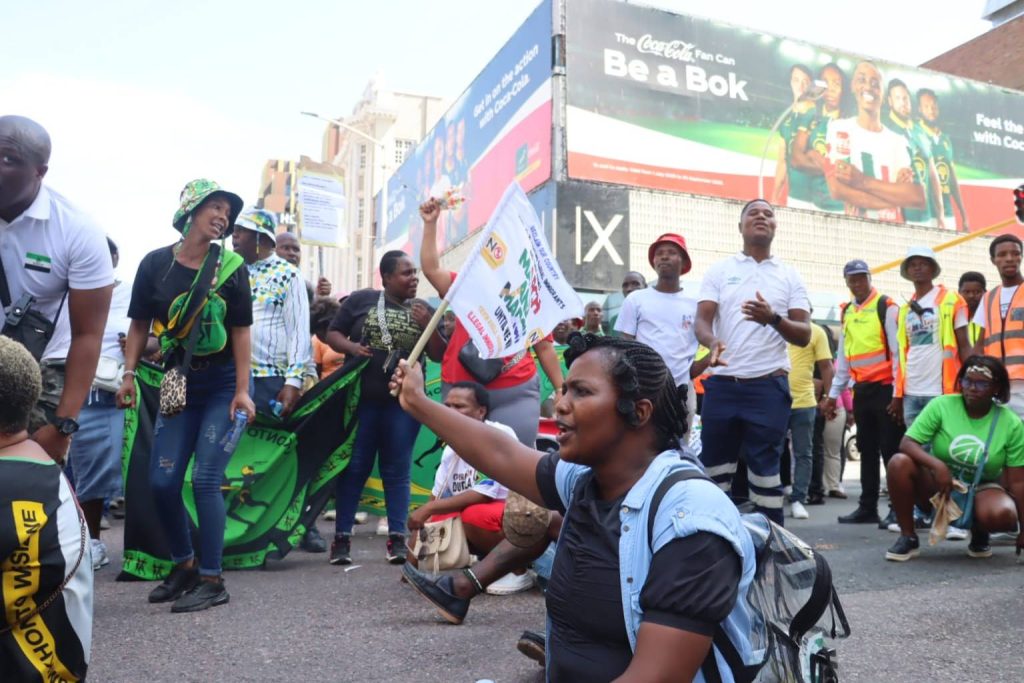
Leaders delivered fiery speeches, with March and March’s Jacinta Ngobese-Zuma declaring that South Africans were “united” and unapologetic in demanding mass deportations. ActionSA’s Herman Mashaba echoed the sentiment, framing undocumented migration as a crisis eroding jobs and straining public resources.
But beyond the rhetoric, there was little clarity on what comes next.
No formal memorandum of demands appeared to shift government policy, and there was no immediate response from national authorities. For many observers, the march felt more like a political show of force than a decisive turning point.
Even the presence of multiple parties failed to generate a clear, coordinated strategy. While all agreed on stricter enforcement, differences lingered on implementation, exposing cracks beneath the surface of “unity”.
The anticipated boost from the so-called “Zulu warrior” mobilisation expected at the end of March also failed to materialise in any meaningful way during this protest, leaving the event short of the momentum organisers had hinted at.
In the end, the march highlighted public frustration but stopped short of creating real pressure for change — a loud statement, perhaps, but one that faded quickly after the crowds dispersed.
Email: motshwari@onenews.co.za