
Story by Nyiko Moloi |
The midday rush in Durban’s city centre slowed to a steady hum as chants rose above the traffic on West Street. Between taxis, office workers and street vendors, a different kind of crowd moved with purpose — not for work, but for something they say is far bigger than themselves.
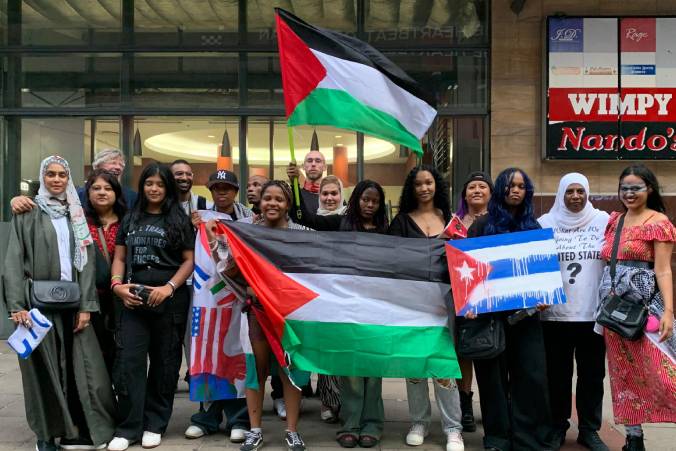
Wrapped in keffiyehs, carrying handmade placards, and marching shoulder to shoulder, pro-Palestinian activists turned the busy street into a corridor of solidarity. For many, this was not just a protest — it was personal.“I see myself in them,” said one young marcher, her voice steady but emotional.
“What they are going through… it’s not just news. It’s people, families.”The Durban march formed part of a wider wave of demonstrations across South Africa, with similar scenes unfolding outside diplomatic offices in Johannesburg and Cape Town.
The protests come amid growing calls for the government to halt coal exports to Israel — a demand activists argue is tied to the ongoing war in Gaza. At the heart of the Durban march was a strong youth presence. Many had never been to Palestine, yet spoke about it as if it were home.
Thandeka Tshabalala, representing a youth committee, said their message was simple: young South Africans do not want to be complicit. “We are here for the people of Palestine,” she said. “We are here because silence feels like support for something we cannot accept.”Nearby, Nokwanda Cele stood quietly before speaking.
“This is about standing up to powerful nations that bully others,” she said. “Today it’s Palestine. Tomorrow it could be anyone.”For Nasiha Soomar, co-founder of the South African Palestine Movement, the struggle stretches far beyond one country. She spoke of interconnected pain — from the Democratic Republic of Congo to Sudan — arguing that global systems of power bind these conflicts together.
“We are all connected,” she said. “If we don’t speak now, we become part of the problem.”That sense of connection echoed through the crowd. Some protesters carried not only Palestinian flags, but also symbols representing other nations facing conflict — a visual reminder that, for them, this was about global justice.As the march wound down, the chants softened but the message remained firm. Organisers say this is only the beginning, with weekly protests planned and legal pressure mounting on government to act.
Long after the crowd dispersed and the city returned to its usual rhythm, a few placards remained on the pavement — silent, but still speaking.